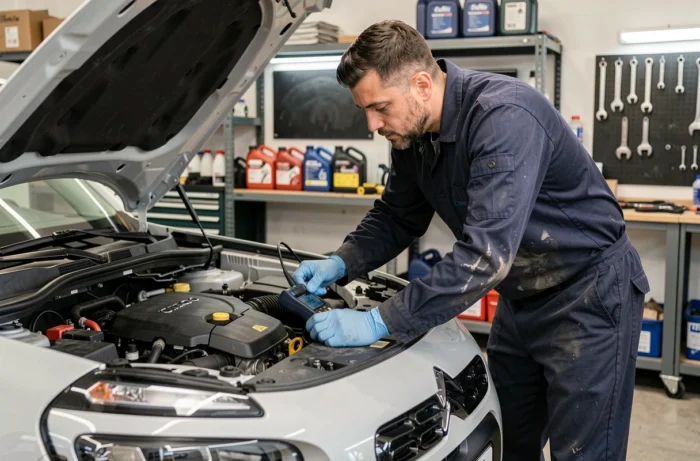
The C3 Aircross equipped with the 1.2 PureTech engine is among the most queried vehicles regarding E85 compatibility. This three-cylinder turbo engine, shared with several Stellantis models, originally runs on SP95 or SP95-E10. Switching to superethanol requires a modification of the injection system, and feasibility depends on parameters more specific than the vehicle’s simple commercial name.
PureTech engine code and verification before E85 conversion
Two C3 Aircross vehicles labeled “1.2 PureTech 110” may have different engine calibrations. Manufacturers of approved ethanol boxes do not rely on the model displayed on the registration document: they require the engine code or VIN to confirm eligibility.
This distinction matters because the number of injectors, injection management (direct, indirect, or combined), and the software version of the ECU vary by model year. A PureTech 110 produced in 2019 and another assembled in 2021 do not necessarily have the same fuel architecture.
Before any steps are taken, verification involves three pieces of information detailed in the technical sheet available on the C3 Aircross engine on Motor X Club: the exact reference of the block, the type of injection, and the Euro standard of the vehicle. This data can be found on the manufacturer’s plate or in the maintenance booklet.

Approved ethanol box for C3 Aircross: what the warranty actually covers
Installing an approved flexfuel box on a C3 Aircross complies with the framework set by the decree of November 30, 2017. This text requires that the device be installed by an authorized installer, according to the manufacturer’s specifications. A personal installation or simple reprogramming does not provide administrative compliance.
Regarding the warranty, a common confusion needs to be clarified. The approved box must cover damages to components directly exposed to the conversion (injectors, fuel pump, hoses, lambda sensor). Elements unrelated to the fuel change remain normally covered by the existing manufacturer’s warranty, if it still exists.
The actual scope of this protection depends on several factors:
- The contract signed with the box manufacturer, which specifies the covered parts and the duration of coverage
- The proof of a direct link between a failure and the conversion, in case of a dispute with the manufacturer
- The adherence to the recommended maintenance schedule, including oil changes and fuel filter replacements
An approved box does not equate to a complete transfer of the manufacturer’s warranty to the device manufacturer. Each conversion contract sets a distinct coverage perimeter, and careful reading of the terms before signing avoids unpleasant surprises.
Wet timing belt of the PureTech: an increased risk with E85?
The 1.2 PureTech engine features a timing belt immersed in oil, sometimes referred to as a “wet belt.” This design, specific to several generations of the block, has been subject to recalls and warranty extension programs by Stellantis due to cases of premature degradation.
Switching to E85 does not directly alter the oil circuit, but it increases the engine’s stress. Superethanol contains less energy per liter than SP95: the ECU, via the box, extends injection times to compensate. The engine runs with a higher fuel flow, which can exacerbate oil dilution from unburned ethanol residues, especially on short trips.
This dilution accelerates the loss of the oil’s lubricating properties. In an engine where the timing belt is precisely immersed in this oil, the quality of the lubricant becomes an even more critical parameter after E85 conversion.
Specific maintenance precautions after conversion
The oil change intervals recommended by the manufacturer do not account for superethanol fueling. Several box installers recommend shortening these intervals, although no single standard exists.
- Use engine oil that meets the manufacturer’s specifications, or even switch to a higher grade oil after consulting the mechanic
- Monitor the oil level and viscosity more frequently, especially in urban use with repeated cold starts
- Have the condition of the wet timing belt checked according to Stellantis’s schedule, without postponing the deadline under the pretext of low mileage
- Replace the fuel filter at closer intervals, as ethanol tends to dislodge accumulated deposits in the tank
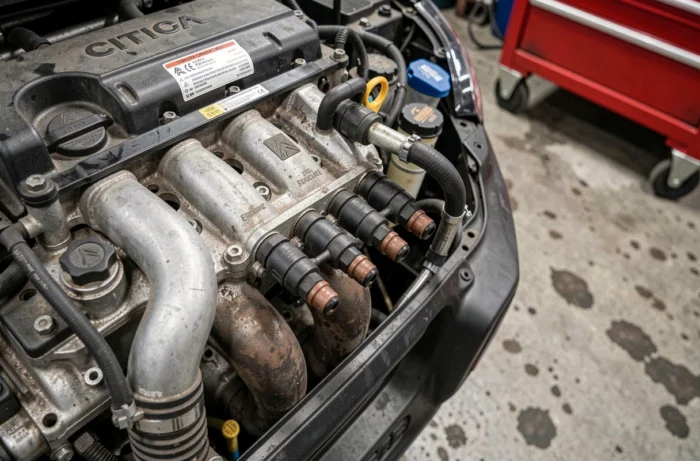
E85 overconsumption on C3 Aircross engine: what to expect
Superethanol contains less energy per liter than SP95. Therefore, the engine requires a significantly higher amount of fuel to produce the same power. In practice, overconsumption falls within a significant range compared to unleaded fuel.
The economic advantage relies on the price difference at the pump between superethanol and unleaded fuel. This difference remains favorable to E85 in most French stations, but it decreases if the vehicle primarily drives in the city with short trips. In this case, the engine does not reach sufficient temperature to burn the ethanol effectively, which worsens both consumption and the oil dilution mentioned earlier.
The financial interest of the conversion depends on annual mileage and driving profile. A C3 Aircross used daily on roads or in suburban areas amortizes the cost of the box more quickly than a vehicle limited to short urban trips.
The decision to convert a C3 Aircross to superethanol is not just about plugging in a box. The specifics of the PureTech, with its wet belt and various generations of injection, require prior verification by engine code and appropriate maintenance follow-up. Without these precautions, savings at the pump may end up funding repairs that could have been avoided.