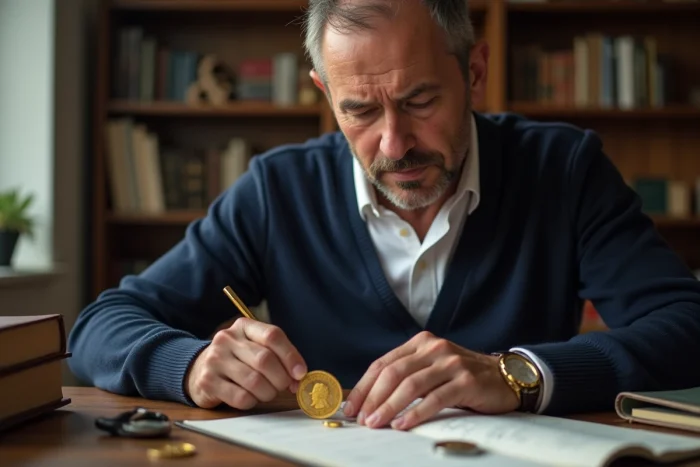
Nearly 40 million Napoleon gold coins were minted between 1803 and 1914, but the circulation of counterfeits and copies undermines buyers’ trust. Despite precise features mandated by French legislation, altered specimens still make their way onto the market, taking advantage of overlooked details or partial information. Some official variants, resulting from special strikes or reissues, blur the lines and complicate the task for both collectors and investors. In the face of these risks, knowing reliable authentication methods and criteria remains essential to avoid costly pitfalls.
Recognizing a Genuine Napoleon Gold Coin: Essential Criteria to Check
The examination of a Napoleon coin always begins with bright light and a keen eye. Every design, every letter must appear sharp and clear, right down to the famous Marianne rooster, a striking symbol of the Third Republic, whose relief reveals the quality of the strike. For counterfeiters, small signs like the discreet scallop shell of the engraver are sometimes overlooked, a detail that many neglect, to their detriment.
Authenticity is not just about appearance. Trust the values inscribed: a 20 franc Napoleon coin weighs exactly 6.45 grams with a diameter of 21 mm, this is non-negotiable, and any variation should raise suspicion. Also observe the workshop mark, a letter or symbol near the date that indicates the origin of the strike. On certain years, the motto “God protects France” engraved on the edge provides an unmistakable clue.
If doubt remains, surrounding yourself with a professional makes a difference. The discerning eye of a numismatic expert can distinguish the original from the copy, but you can also find a precise and visually documented analysis on the Rennes en commun 2020 website. This type of resource allows you to confidently compare your coin to established references. Finally, the overall condition should never be overlooked: scratches, signs of wear, and cleaning marks immediately affect the value.
Common Pitfalls and Mistakes in Authentication: What to Absolutely Avoid
Relying solely on the appearance of a coin is often misleading. Some modern counterfeits offer impressive details, marked relief, and neat lettering, but reveal telling signs: an imperfect Marianne rooster design or the absence of the famous scallop shell. It is important to push the analysis further.
Measurements are crucial. A simple deviation of a few hundredths in weight or diameter can reveal the imposture. Old tests, such as rubbing on a touchstone, should be banned: this type of manipulation damages the coin without providing a reliable answer. Instead, turn to modern, non-invasive methods, such as XRF spectrometry, which delivers the exact composition of the metal in an instant.
To maximize your chances, keep the following steps in mind:
- Always use gloves when handling to avoid leaving marks or initiating oxidation.
- Strictly check the condition: a damaged or over-cleaned coin loses much of its value.
- Consult a qualified numismatic expert when the slightest doubt arises, rather than relying on unreliable advice.
The problem is that fakes are no longer limited to coarse alloys. Sometimes, copies are made of silver coated with a thin layer of gold. All the more reason to systematically check every parameter, from the hallmark to the edge. Staying methodical and seeking the opinion of a specialist is the best defense against errors.

Current Value of Napoleon Coins: Understanding the Factors That Influence Their Price
What a Napoleon coin is truly worth is never a matter of chance. The gold price dictates the base price, a factor closely monitored by all insiders. However, rarity, provenance, year, and condition can drive up bids, both in the numismatic world and in the investment market.
A coin that has never been handled bare-handed, which has retained its reliefs and immaculate engraving, will see its value appreciate over time. Collectors hunt for the slightest mark: scratches, faded letters, or persistent wear. The result? Less common workshops, certain years, or unique stories weigh in the balance, sometimes well beyond the mere weight of the precious metal.
Factors Influencing the Price of a Napoleon Coin
To better understand what makes a coin valuable, keep these determining criteria in mind:
- Gold price: an internationally followed reference that is adjusted daily
- Rarity: certain years or workshops quickly become sought after by connoisseurs
- Condition: from nearly new to significant wear, the price gap is considerable
- Demand: a highly sought-after coin will find a buyer quickly, and its price will reflect that
Behind an investment in Napoleon coins lies more than just the pursuit of profitability. These coins tell a story, carry a collective memory, and allow for intelligent diversification of a tangible asset portfolio. When well chosen, they can transcend generations, and sometimes, a simple outstretched hand is enough to give them a new life.