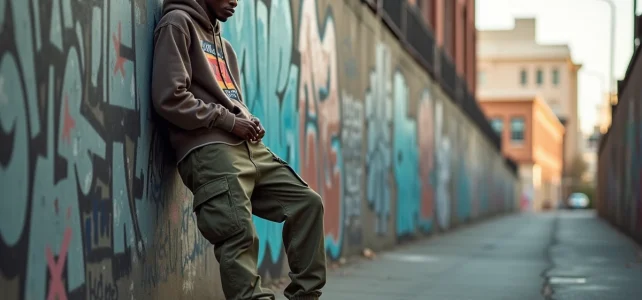
Streetwear refers to a set of clothing codes that emerged in the 1980s, at the intersection of California skate culture and New York hip-hop. Baggy t-shirts, sneakers, hoodies, caps: these pieces worn on the street have become a visual language shared by millions of people. Understanding the evolution of streetwear means tracing the roots of an urban culture that has redefined the boundaries between fashion, music, and identity.
The Role of Skate and Hip-Hop in the Birth of Streetwear
Two geographically distinct scenes laid the foundation for this movement. In Los Angeles, skaters in the 1980s wore loose and durable clothing, suitable for practice on pavement. In New York, rappers like Run-D.M.C. showcased unlaced Adidas and baggy tracksuits on stage.
These two communities shared a common trait: they did not dress to please the fashion industry. Their clothing reflected a lifestyle, a sense of belonging to a group. Style was not an isolated aesthetic choice, but the direct expression of a subcultural identity.
Shawn Stussy, a Californian surfer, was one of the first to transform this clothing code into a brand. By printing his graffiti tag on t-shirts, he created a bridge between street culture and commerce. To delve deeper into these origins, Klottra’s article on streetwear outlines the foundational steps of the movement.
Have you noticed that sneakers are ubiquitous in today’s urban wardrobe? Their history predates streetwear. As early as the 19th century, the first canvas shoes with rubber soles existed. Streetwear gave them a cultural status that sports alone had failed to establish.
Streetwear and the Luxury Industry: A Tense Alliance
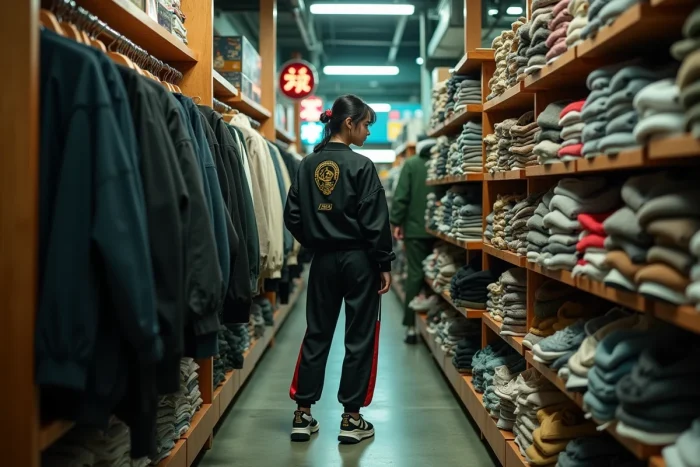
Starting in the 2010s, fashion houses began to incorporate streetwear codes into their collections. Branded hoodies, sneakers costing several hundred euros, collaborations between luxury brands and urban labels: the boundary between street and runway blurred.
This convergence propelled streetwear into a new commercial dimension. Brands like Supreme adopted the model of limited drops, meaning releases of pieces in restricted quantities. This mechanism of scarcity transformed clothing into collectible items, sometimes resold at prices well above the original retail price.
The limited drop shifted the value of clothing towards its rarity, not towards its textile quality or design. This shift attracted an audience motivated by speculation rather than by belonging to a culture. The resale market exploded, creating a parallel financial ecosystem.
The question of sustainability also arises. Producing in small batches creates a sense of urgency but encourages overconsumption of impulsive purchases. Several industry players are beginning to integrate more ethical practices, although the trend remains marginal compared to the scale of the market.
Drops, AI, and Authenticity: Streetwear Facing Its Industrialization
Streetwear was built on the idea that style comes from the street, not from a trend office. This promise of authenticity struggles to withstand the industrialization of the sector.
Two phenomena accelerate this tension:
- Limited drops, initially reserved for a few pioneering brands, have become a marketing mechanism replicated by hundreds of labels, draining the concept of its community dimension
- Generative AI tools allow for the rapid production of patterns, logos, and t-shirt designs, without any connection to a local scene or cultural practice
- The proliferation of collaborations between brands dilutes the visual identity unique to each label, making collections interchangeable
When anyone can generate a streetwear design in a few clicks, the cultural entry barrier disappears. The clothing loses its grounding in a skate, hip-hop, or graffiti community. It becomes a generic product dressed in borrowed visual codes.
This does not mean that streetwear is dead. Independent creators continue to draw from their immediate environment to offer pieces rooted in lived experience. Rapper Molly Santana, for example, developed her brand Crooked Mouth starting from underground rap to create a fashion object linked to her musical scene.
The Global Streetwear Market: The Growing Weight of Asia-Pacific
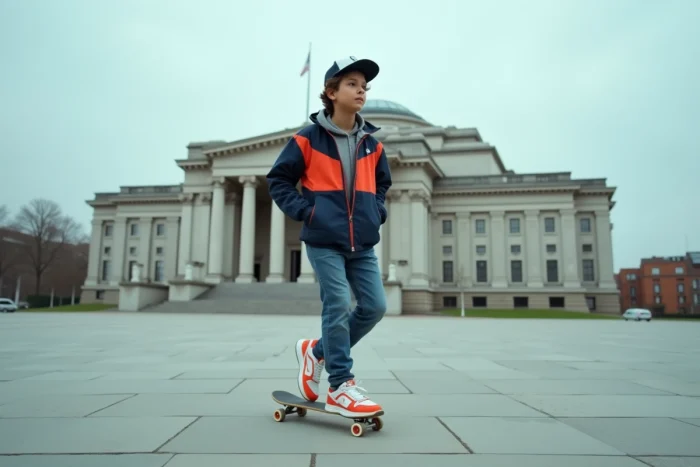
Streetwear is no longer an exclusively American phenomenon. The Asia-Pacific region accounted for more than a third of the global market in 2025, according to Fortune Business Insights. China, Japan, and South Korea are driving this growth, fueled by rapid urbanization and the influence of K-pop on fashion trends.
This geographical shift alters the cultural references of the movement. Asian streetwear incorporates local elements (calligraphy, repurposed traditional patterns, silhouettes inspired by Korean fashion) that have nothing to do with the skate culture of Venice Beach or the hip-hop of the Bronx.
The Case of New Balance and Functional Aesthetics
The recent evolution of streetwear trends also involves a return to functionality. New Balance launched its Grey Days 2026 at the end of April, transforming gray, a historical color of its 1980s running models, into a true urban cultural manifesto. Gray, long perceived as neutral, becomes a claimed distinctive sign.
This approach illustrates a broader movement: functional streetwear prioritizes sobriety and durability over the accumulation of logos and flashy collaborations. Technical pieces designed for everyday wear are gradually replacing limited editions meant to stay in their boxes.
The evolution of streetwear reflects the contradictions of contemporary fashion. A movement born from the rejection of established codes finds itself absorbed by the industry it once contested. The skate and hip-hop communities that founded it continue to exist, but their influence is diluted in a globalized market where algorithms sometimes replace the pavement as the creative ground.