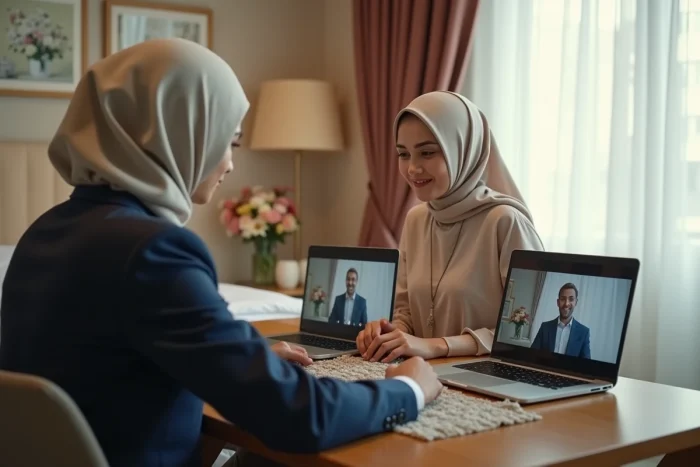
A couple separated by two borders, a wali on the phone, two witnesses in a mosque, and no one in front: the scene regularly repeats itself in the Muslim diaspora. Long-distance marriage in Islam raises very concrete questions, from the validity of the religious contract to the rights that a woman can actually assert if things go wrong.
Women’s Rights and Unregistered Long-Distance Marriage: The Real Risk
Let’s start with the point that most online guides gloss over. When a nikah is celebrated at a distance without any civil registration in the country of residence of the wife, she finds herself in a legal void. No alimony in case of separation, no automatic inheritance rights, no recognition of child custody in a civil court.
Classical fiqh protects women on paper: the mahr belongs to her, the husband must provide independent housing, and divorce follows specific rules. In practice, without a civil act, these rights remain unenforceable before a French or European judge. We end up with two systems that do not communicate.
Several imams in France, the United Kingdom, and Belgium now refuse to celebrate a religious marriage at a distance without prior or parallel civil recognition. Their argument: the increasing number of cases where wives discover, sometimes years later, that long-distance marriage in Islam has no value in the law of the country where they live. The situation directly affects inheritance, divorce, and child custody.
Conditions for Validity of Nikah at a Distance According to Fiqh
For a marriage to be valid in Islam, four pillars must be met, whether the spouses are in the same room or thousands of kilometers apart.
- The free consent of both spouses, expressed clearly and verifiably. By video conference, this means that each party must be unambiguously identified by the witnesses.
- The presence of a wali (marital guardian) for the woman, required by the majority of Sunni legal schools. The wali can be physically present on the bride’s side or participate from a distance, depending on opinions.
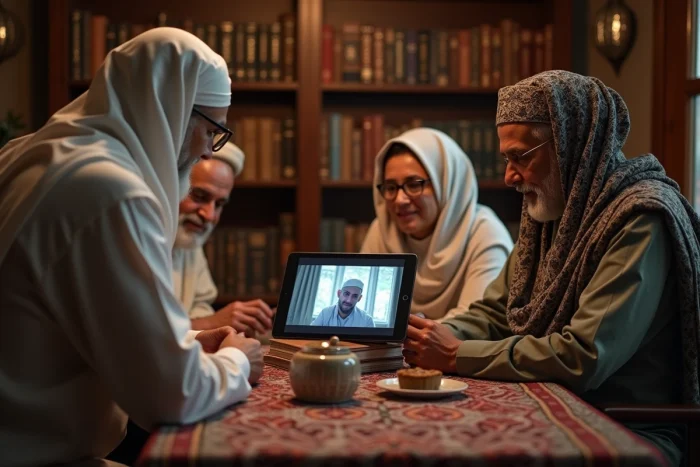
- Two adult, sane Muslim witnesses who attend the exchange of consent in real-time. Opinions vary on this point: some scholars accept that the witnesses are split between the two locations, while others require them to all be on the same side.
- The fixing of the mahr (dowry), the amount and payment terms of which are agreed upon before or during the ceremony.
Contemporary scholars who permit nikah by phone or video conference rely on the principle that the offer and acceptance must be simultaneous and unequivocal. A simple exchange of written messages, without real-time interaction, poses problems for several jurists.
The Role of the Wali in a Cross-Border Context
When the woman resides in one country and her wali in another, the logistical question is compounded by a question of legitimacy. The wali must be able to verify the identity and situation of the future husband. At a distance, this verification often relies on the trust placed in the local imam or intermediaries.
If the woman does not have an available wali, some mosques in Europe accept that the imam acts as a substitute wali, but this practice is not universally accepted among the Hanafi, Maliki, Shafi’i, and Hanbali schools.
Housing Obligation and Cohabitation After Long-Distance Zawaj
One point that contemporary fatwas insist on: the husband remains obligated to provide independent housing for his wife, even if the couple lives separately at the beginning of the marriage. The nikah does not suspend this obligation.
In practical terms, this means that the husband must plan the timing and conditions of cohabitation, including visa procedures if the spouses reside in different countries. A long-distance marriage that extends indefinitely without a plan for reunification can be ethically contested by religious authorities, and in some Muslim countries, legally.
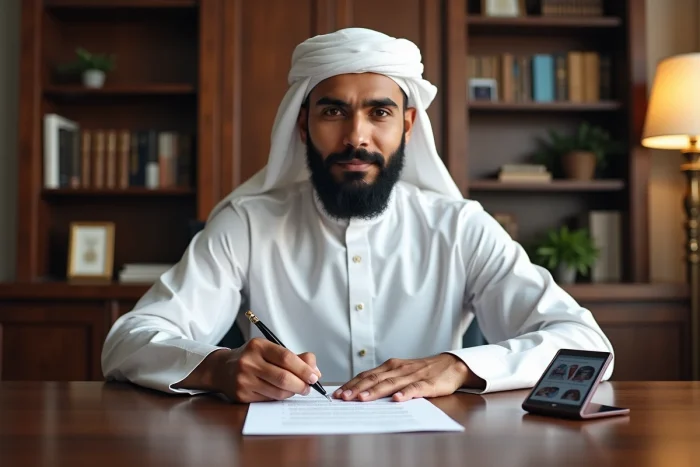
We see situations where long-distance marriage serves as a temporary solution while obtaining a joint visa. The problem arises when no administrative steps are taken, and the woman finds herself religiously married without a concrete prospect of living together or legal protection.
Civil Registration of Islamic Marriage at a Distance: Procedures Country by Country
Civil recognition entirely depends on the law of the country of residence of each spouse. In France, a religious marriage alone has no legal value. The Civil Code requires a ceremony before a civil registrar for the marriage to produce effects (property rights, filiation, alimony).
What This Changes for Muslim Women in Europe
Without civil registration, a woman cannot:
- Request alimony or a compensatory payment in case of separation
- Automatically inherit in the event of the husband’s death
- Have custody of her children recognized in a civil court
- Initiate divorce proceedings with property division
Civil registration does not annul the nikah; it complements it. The two acts coexist and protect the woman on both religious and legal fronts. Some imams in France condition the celebration of the nikah on the presentation of a civil marriage certificate or a scheduled civil ceremony date.
Muslim Countries and Consular Transcription
In several Muslim countries, a religious marriage certificate can be transcribed at a family court to obtain official recognition. The procedure varies: generally, two witnesses, the signed marriage contract, and validation by a judge or religious notary are required. For a couple where one spouse resides in Europe, consular transcription is often the only bridge between the religious marriage celebrated at a distance and recognition by the country of origin.
Validating the marriage in both countries protects against most legal deadlocks. Waiting for “the situation to clarify” leaves the woman without a safety net, sometimes for years. Long-distance nikah remains a legitimate solution within the Islamic framework, provided that each step, from consent to registration, is treated with the same rigor as a marriage conducted in physical presence.