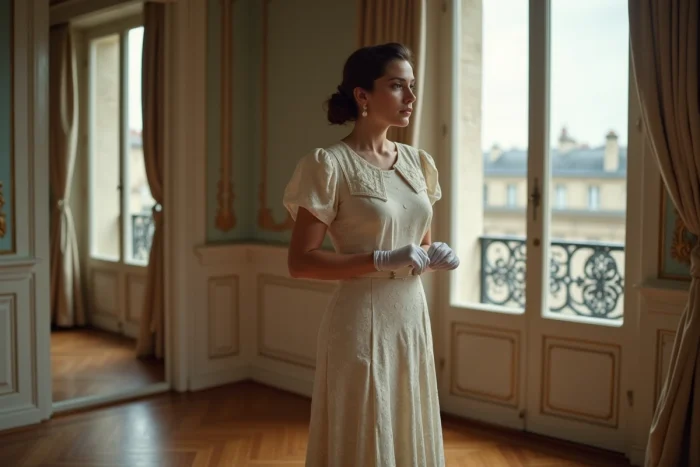
It is not the quantity of fabric that gives grace to a dress, but the way it hugs the body and reflects the era. After the war, fashion is forced to comply with strict rules: rationed fabric, streamlined cuts, everything must be measured to the millimeter. Yet, behind these limitations, clever designers forge a new vision of chic. They reinvent femininity with their needles, transforming every constraint into an asset, every economy into a signature. This balancing act between rigor and invention will lay the foundations for a style now sought after by all those who see vintage fashion as more than just simple nostalgia.
The decade sees the birth of a constant dialogue between imposed norms and small discreet revolutions. The cuts become sharp, the materials modest yet carefully chosen. Nothing is given to boredom: every button, every hem, every detail reflects a deliberate choice. The dresses designed during this time have lost none of their evocative power. They embody a form of elegance that transcends necessity, reminding us that beauty is as much about constraint as it is about the freedom to play with it.
Why the style of the 40s still fascinates today
It is impossible to talk about women’s fashion of the 40s without mentioning the constant tension between restriction and refinement. The Second World War imposes an economy of means, but instead of stifling creativity, it stimulates it. Clothes are adorned with sharp lines, the nipped waist becomes the norm, skirts stop mid-calf, and shoulders gain prominence. Over the years, practicality is combined with a contained elegance, never dull.
Masculine influences make their entrance, driven by the boldness of figures like Katharine Hepburn. Trousers become popular, the tailored jacket becomes a tool of affirmation. On the big screen, Hollywood shapes new icons. Lauren Bacall, Rita Hayworth in “Gilda,” Lana Turner in “The Postman Always Rings Twice,” Jean Simmons in “Angel Face”: all embody a magnetic, independent, sometimes dangerous femininity. Satin, bustiers, furs: the glamour of film noir enters wardrobes and leaves a lasting impression.
Choosing a 40s dress today is a choice of style but also of values. Vintage fashion stands as an antidote to fast consumption: it prioritizes sustainability, ethical production, a love for materials and well-crafted gestures. Seeking second-hand becomes a thoughtful act, a nod to the ephemeral. Enthusiasts of mix and match draw from this decade to create outfits that assert their personality and independence. The gender-fluid style, the retro spirit, the desire to break codes, all find their roots in these pivotal years.
For an in-depth analysis and detailed exploration of this era, the Blogueur net site offers a comprehensive overview of “Vintage Fashion and Iconic Dresses of the 1940s.”
Spotlight on the iconic codes of vintage dresses from this decade
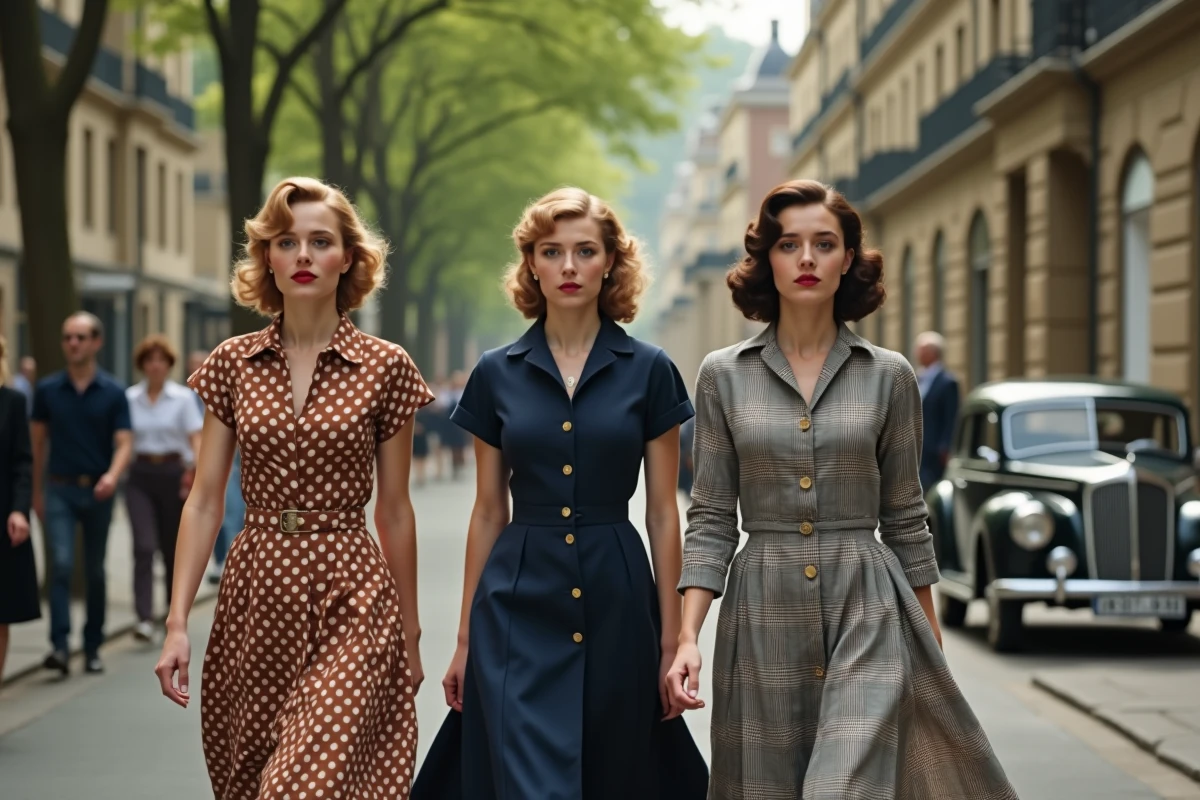
The key pieces of the 40s wardrobe rely on an economy of means transformed into an aesthetic choice. Choosing a vintage dress from this era means rediscovering the demand for a clean line and a structured silhouette. The waist is cinched, the shoulders broaden, sometimes supported by XXL shoulder pads. The midi skirt becomes essential, versatile, suitable for both everyday life and the realities of rationing.
The British CC41 program directs creation towards utilitarian clothing: wool, cotton, rayon dominate, and all superfluous elements disappear. But creativity hides in the details: contrasting collar, graphic buttonhole, well-defined belt. Ginger Rogers establishes the “Kitty Foyle” shirt dress as a reference for elegant pragmatism. American designers Norman Norell and Claire McCardell shine in the art of adapting fashion to the realities of the time.
In Paris, haute couture regains vigor with the Theater of Fashion. But it is in 1947 that Christian Dior makes a significant impact with the New Look: full skirt, corseted waist, an overt return to luxurious femininity. Accessories complete the retro look. Here are the essentials of the 40s dress style:
- wool or toque hat
- cork-heeled shoes
- vintage jewelry (pearls, brooches, clips)
- retro bag and silk scarf
The decade also gives birth to the bikini thanks to Louis Réard. Graphic sunglasses and the long trench coat become the distinctive mark of the pin-up or femme fatale style. The 40s dress, with its rigor and elegance, tells a story of a time when every detail underscores a desire for freedom and affirmation.
Integrating retro elegance into your wardrobe: tips and inspirations for a current look
The vintage fashion of the 40s is anything but a fixed disguise. To adopt it, it is better to strike a balance: pair a 40s dress with current accessories, revisit a retro piece with a structured jacket or modern shoes. Silhouettes inspired by Lauren Bacall or Katharine Hepburn still inspire those who love to blur the lines between masculine and feminine: fluid trousers, loose shirt, wool jacket. The retro look is conceived as a process: prioritize slow fashion, second-hand, focus on quality and fit, refuse compromises on material.
To enhance an elegant outfit, some accessories remain timeless:
- vintage jewelry (pearl necklace, Art Deco brooch, ear clips)
- retro leather bag or vintage cardholder
- silk scarf tied around the neck or tucked in the hair
Icons like Marilyn Monroe, Audrey Hepburn, or Jean Seberg mastered the art of combining simplicity and style. To recapture the spirit of Dior’s New Look, nothing is more effective than a dress with a defined waist, full skirt, and medium-heeled pumps.
Investing in well-chosen second-hand pieces, prioritizing natural materials and well-considered cuts, is also a way to embed your style in a responsible approach. The women’s fashion of the 40s, with its refined sobriety, continues to engage with our time and invites us to reinvent our daily wardrobe under the sign of regained authenticity.
Nothing is fixed: every vintage dress worn today tells a different story, between memory and renewal. Who would have thought that the past could offer so many answers to our desires for the future?