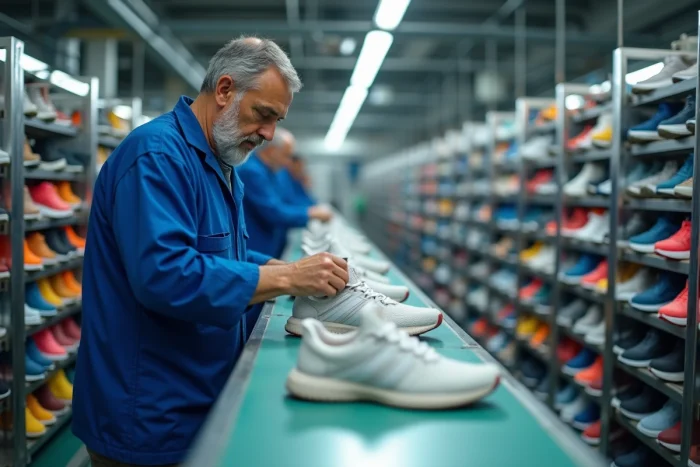
Skechers does not own any factories in its name. To run its production, the brand relies on a tight network of subcontractors, most often based in China and Vietnam. Other workshops also participate, in Cambodia or Indonesia, to meet demand or depending on the availability of materials.
For certain models, more specific components come from Europe or South America: technical soles, performance fabrics… The goal? To gain responsiveness and control costs, even if this organization makes traceability more difficult to establish. Skechers imposes strict quality controls, but this industrial model raises questions about environmental impact and the risks of counterfeiting.
Where are Skechers sneakers actually made? An overview of production sites
Behind every pair, there is no direct Skechers workshop: manufacturing relies on a network of Asian partners. Almost all production comes from China and Vietnam, for flagship models as well as limited editions. These sites provide the necessary flexibility to quickly adjust volumes, following market trends.
The map of Skechers factories does not stop at these two giants. Cambodia and Indonesia also host assembly lines dedicated to specific collections. These workshops are often specialized in integrating new technologies or innovative materials, allowing Skechers to keep up with trends while maintaining control over its finances and timelines.
Despite this international network, transparency remains partial. Labels indicate the assembly location but rarely the exact origin of materials. For example, memory foam soles or certain technical textiles may have crossed the Atlantic before reaching the final workshop. For those who want to delve deeper into the subject, where Skechers sneakers are made offers a detailed dive into the logistics and actual circuits of the brand.
All of this outlines a borderless industry, organized to respond promptly to global market expectations. This segmentation, designed for competitiveness, forces Skechers to conduct regular checks and constantly juggle between innovation and vigilance regarding the final product quality.
Materials, processes, and environmental impact: what the manufacturing backstage hides
A pair of Skechers never leaves the factory without being meticulously designed. Polyurethane, EVA, technical textiles, sometimes recycled materials: the range of materials expands with each new line. The soles, the highlight of in-house innovation, combine memory foam, gel, or varying densities to ensure effective cushioning and immediate comfort.
Repeated quality checks mark every stage of production. Stitch strength, bonding, finishing—nothing escapes scrutiny. Skechers imposes high standards on its partners, encouraging the ever-increasing integration of recycled materials. This evolution is partly driven by regulatory changes but also by rising customer expectations regarding environmental respect.
What are the consequences for the environment?
Here are the concrete realities to keep in mind when considering the impact of this production:
- The majority of Asian workshops consume energy that is still largely derived from coal.
- The management of industrial waste varies from site to site, with varying levels of transparency and sometimes insufficient practices.
- The use of adhesives and solvents poses air quality issues on production lines.
Progress to limit the ecological footprint of sneakers exists, but it is slow. The pressure to quickly release new collections and the constant search for competitive pricing sometimes weigh more heavily than ecological ambitions. In the end, behind increasingly innovative models, industrial production reminds us that the path to a planet-neutral sneaker is still long.

How to recognize a genuine pair of Skechers: practical tips against counterfeiting
Imitations are rampant. In many markets, fake Skechers are displayed at rock-bottom prices. However, it is still possible to differentiate the original from the copy with a few good reflexes. Examine the details: clean stitching, sharp finishes, consistent materials; genuine pairs always stand out by the quality of craftsmanship, the result of constant control at the workshop.
Do not overlook the labels and packaging: each authentic shoe has a discreet serial number under the tongue. Copies often neglect this detail or provide easily recognizable fake codes. The logo should catch your eye: harmony of typography, clarity of printing, and flawless alignment. Beware of any discrepancies.
Points of caution when purchasing
Make it a habit to check, before buying:
- Very low prices: a genuine Skechers is never sold at ridiculous amounts.
- Official stores and websites: purchasing from a recognized point of sale guarantees traceability and authenticity.
- Comfort: only the originals offer distinctive cushioning and support, thanks to the brand’s proprietary technologies.
In the age of online platforms, vigilance is essential. Counterfeits are becoming increasingly realistic, but the details often betray the deception—an aspect, an impression underfoot, a dubious marking. The attentive buyer makes the difference and avoids disappointments, ready to stride with sneakers on, feeling lighter in spirit (and step).