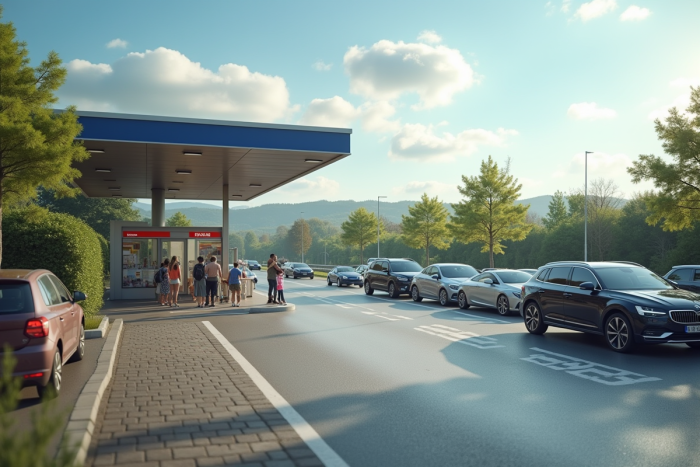
Highway service stations do not apply the same rates as those located outside the concession network, with differences sometimes exceeding 20%. Some areas impose a maximum parking duration, under penalty of a fine, even during off-peak times. Fast charging stations for electric vehicles remain unevenly distributed, despite announcements from dealers. Carpooling applications for highways do not cover the entire territory, limiting access to this service on certain routes.
Solutions exist to bypass these restrictions and optimize each step of the journey. Knowing the right tools helps avoid unpleasant surprises and organize the trip with complete peace of mind.
What French highway rest areas really offer travelers
On the road, the highway rest area takes on a new dimension: it is not just a stop, but a pause where every type of traveler finds their place. Far from resembling each other, these stops adapt to the reality of road trips in France. The infrastructures accommodate a diversity of vehicles and travelers:
- family cars looking for an efficient break,
- converted vans for solo travelers or adventurers,
- motorcyclists seeking a quick shelter,
- campervans that appreciate a bit of comfort without constraints.
It is no longer just about refueling. Highway rest areas have broadened their offerings. Today, travelers find much more than fuel and snacks. Some facilities, not immediately visible, really change the game.
Specifically, many amenities meet current expectations: picnic tables for a lunch break, playgrounds to keep children occupied, fast charging stations for electric vehicles, Wi-Fi access to stay connected, and designated areas for campervans to spend the night. The spirit of road trip organization is evident in every detail: managing the budget, planning the itinerary, anticipating breaks.
Applications like Google Maps or Michelin assist travelers, but once at the rest area, the information becomes concrete: detailed maps, recommended routes, tips for discovering the surrounding region. On the ground, the difference is palpable.
For those who prefer independence, comfort is no longer elitist. Taking a shower at a rest area is now accessible to everyone, as detailed on the page “Showers on the highway: finding where to wash easily while traveling – Terre en Vues.” This service, long absent, is becoming more common and meets a real need for fans of van or campervan travel, where hygiene should not be sacrificed for the freedom of movement.
The offerings vary from one route to another, but expand each year: fast food, shops offering local specialties, relaxation areas, and sometimes even marked trails to stretch your legs between two stops. Highway rest areas in France reflect a gradual adaptation to the reality of car travel and personalized road trips. We are no longer just talking about a break, but a true stop that contributes to the flavor of the journey.
Questions to ask to avoid unpleasant surprises and fully enjoy each stop
Before rushing onto the roads of France, it is better to examine the route. Should the itinerary connect Brittany to Dordogne, or climb the Corsican hills? Preparing your road trip is not about restricting your freedom; it’s about making it possible. Each region promises discoveries, but each segment of road imposes its choices. Anticipating also means asking yourself:
- What travel time is acceptable?
- How often should breaks be planned?
- What discoveries will punctuate the route?
- How much room should be left for improvisation?
The budget comes into play early in the planning. Between toll price variations, expenses related to food or accommodation, the bill can add up quickly. Should you aim for a night in a van, book accommodation at the last minute, choose the authenticity of a village or the convenience of a big city? France offers a thousand alternatives, from regulated wild camping to urban hotels. Each person must find the balance between constraints and desires.
Preparing the vehicle allows no slack. A thorough check-up, up-to-date paperwork, verified insurance: every detail matters before hitting the road. For those betting on campervan travel or converted vans, the issue of autonomy is real: where to fill the water tank, where to manage wastewater, where to recharge or park without breaking regulations?
Here is a series of points to examine for a smooth journey:
- Is the itinerary compatible with the season and weather?
- What stops will give rhythm to the journey without overloading it?
- Is the vehicle and equipment suitable for the planned route?
- Are the rules of bivouacking respected in each department crossed?
The road trip in France takes on its full dimension when built on these reflections. The road then becomes a field of controlled exploration, open to the unexpected but never subjected to the fate of chance.