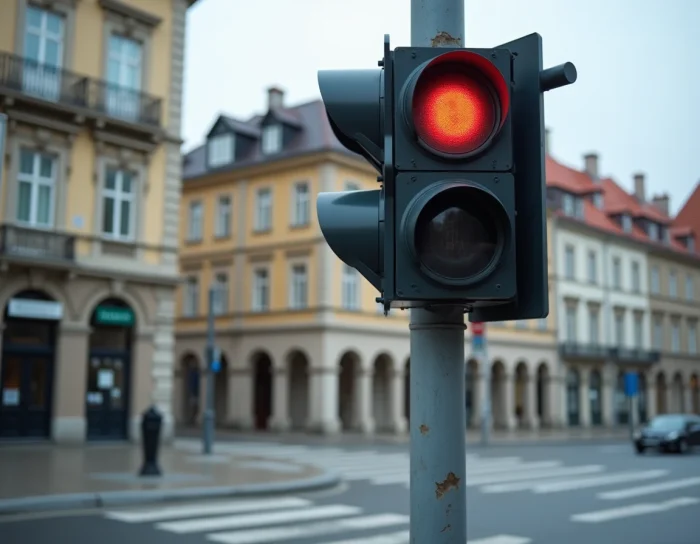
Equipping a community intersection with a traffic light requires a budget that is much larger than just the purchase of the equipment. Between the price of the light itself, roadworks, electrical connections, and maintenance over fifteen years, the total bill can surprise elected officials who have only budgeted for the initial investment. Comparing expense items remains the best way to avoid unpleasant surprises during the municipal council vote.
Pricing Grid: Standard, Intelligent, and Temporary Traffic Lights
The price differences between categories of lights are considerable. The table below summarizes the price ranges based on available data in the French market.
| Type of Light | Unit Price Range | Main Use |
|---|---|---|
| Standard traffic light (LED, D200 mm) | €1,800 – €2,500 | Classic intersection, low traffic |
| Intelligent traffic light (detection, connectivity) | €2,500 – €9,000+ | High traffic intersection, prioritization of public transport |
| Mobile temporary light (alternating) | Several hundred to several thousand euros | Temporary work signage |
| Complete installation of an intersection (studies, roadworks, wiring) | Can exceed €50,000 | Creation or redesign of a regulated intersection |
The price of a traffic light and red light therefore depends as much on the category of equipment as on the scope of the project. A light priced below €2,500 does not reflect the actual cost once the intersection is delivered.
Annual Operating Cost: The Item Underestimated by Municipalities
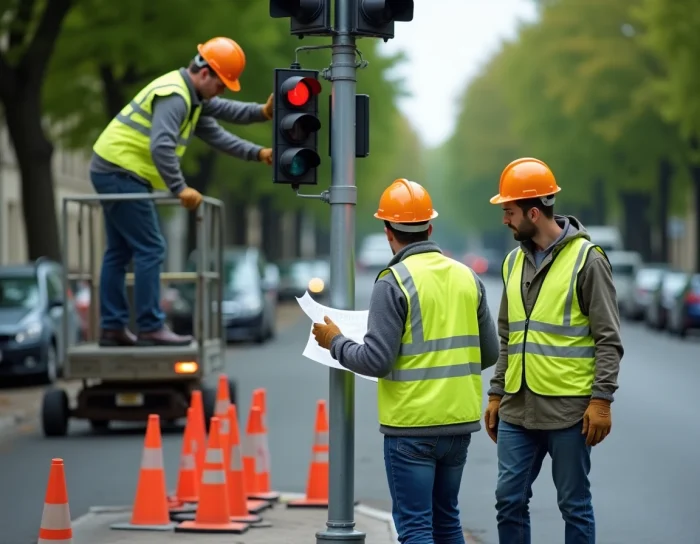
The purchase represents only a fraction of the budget over the lifespan of a light, estimated at around fifteen years. Annual maintenance can reach nearly 10% of the initial cost, a ratio that radically changes the economic calculation.
Components of Operating Costs
- Preventive and corrective maintenance (replacement of LED modules, cleaning of optics, checking the controller) constitutes the first recurring expense. Municipalities that pool maintenance across several intersections obtain lower rates per unit.
- Electricity consumption remains moderate with LED technology, but connection to the grid and subscription generate unavoidable fixed costs, even for a rarely used intersection.
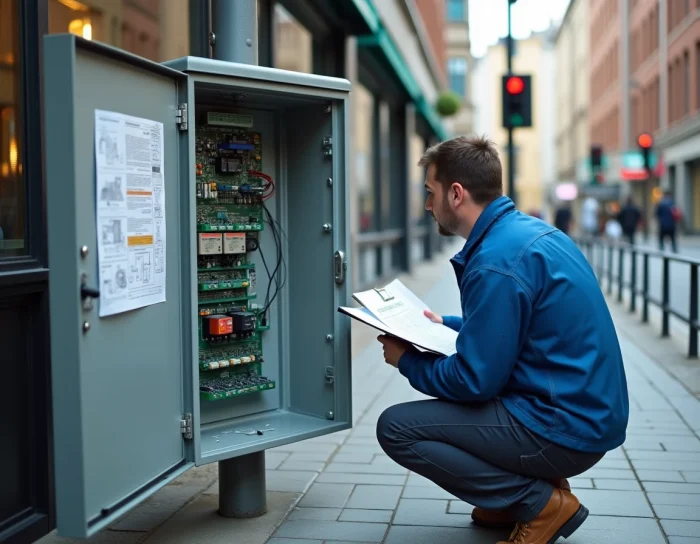
- For intelligent lights, software updates and technical support are added to the standard maintenance contract. These services are billed separately in most recent public contracts.
Over fifteen years, the cumulative operating cost of an intelligent light can therefore approach or even exceed the amount of the initial investment. Municipalities that only compare purchase quotes miss half of the actual expense.
Permanent Light or Temporary Light: An Underutilized Budgetary Decision
Not all intersections justify the installation of a permanent light. For a little-frequented intersection or an area under prolonged construction, alternatives exist that significantly change the financial equation.
Mobile temporary lights (type alternating KR11) cost a fraction of the price of a fixed installation. Their deployment does not require trenches or connections to the electrical network, as they operate on batteries or solar panels. Several municipalities use them as a transitional solution while validating the relevance of a permanent light, thus avoiding a heavy investment in a site where traffic could change.
An active secondary market exists for used traffic lights. Lots of TTS lights are resold to communities or companies on platforms like Leboncoin. This option, rarely mentioned in standard consultations, allows for reducing acquisition costs for temporary uses or real-world testing.
Intelligent Lights: Is the Extra Cost Justified for a Small Municipality?
The price of an intelligent traffic light starts around €2,500 and can exceed €9,000 depending on the level of detection and connectivity. In addition to this price are the integration costs into the municipal or inter-municipal traffic management system, if one exists.
What the Extra Cost Actually Finances
Traffic detection (magnetic loops, cameras, radar) allows for real-time adaptation of light cycles. Prioritizing public transport reduces waiting times at strategic intersections. These functions have a measurable impact on traffic flow in dense urban areas.
However, for a rural municipality with a few hundred vehicles per day, the return on investment for an intelligent light is difficult to demonstrate. The extra cost at purchase is compounded by more complex maintenance and recurring software contracts. A standard LED light, reliable and energy-efficient, meets most road safety needs without burdening the operating budget.
Regulatory Compliance and Certification
Regardless of the type chosen, the light must comply with current standards (road signage, visibility, phase sequencing). Certification conditions the legal validity of the installation in case of an accident. Entry-level or used lights must undergo a compliance check before being put into service, a cost often overlooked in initial estimates.
The choice between standard, intelligent, or temporary lights depends on three variables: daily traffic volume, expected duration of use, and the municipality’s ability to bear operating costs over fifteen years. A light costing €2,000 that incurs €200 per year in maintenance does not have the same budget profile as a light costing €8,000 with an annual software contract.
Putting these figures against the available operating budget remains the most reliable method for decision-making.