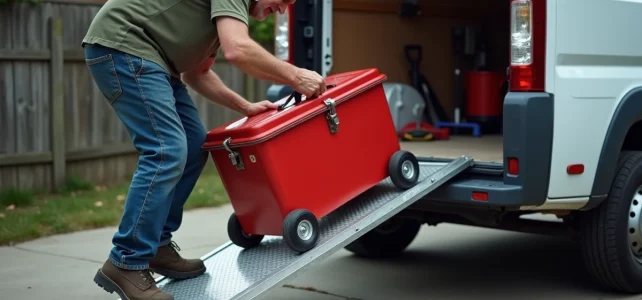
Loading a riding mower onto a trailer, mounting a wood chipper in a utility vehicle, moving a construction compressor between two levels: these everyday DIY actions often result in back injuries or damaged equipment. A loading ramp transforms these risky operations into smooth maneuvers, provided you choose the right model and use it correctly.
Stability and slip resistance on uneven ground: the real safety criterion
When choosing a ramp, the first consideration is usually the load capacity. In practice, the primary issue is rarely the weight, but the stability of the device on ground that is never perfectly flat. Gravel, loose soil, slightly inclined slabs: the ramp must remain stationary throughout the ascent or descent of the equipment.
Risk prevention recommendations (notably those from the INRS) now emphasize anti-slip and lateral retention more than just the gross load capacity. This means checking for rubber pads under the support points, sufficiently high side edges to guide the wheels, and a textured surface (grooves or perforations) that prevents slipping even in wet conditions.
When working alone in your garden or garage, there’s no one to hold the machine if it veers off. A Brico Dépôt loading ramp for your DIY projects generally incorporates these basic safety elements, which is sufficient for most domestic uses.
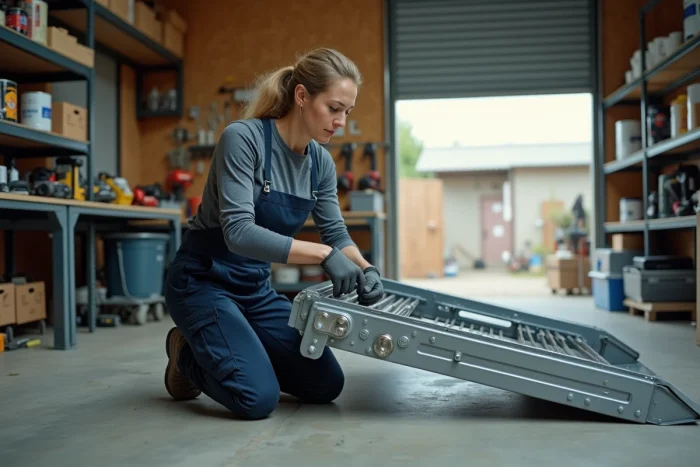
Aluminum or steel loading ramp: a choice that changes the practice
The material determines both the weight of the ramp itself and its lifespan. Aluminum provides a lightweight piece of equipment that one person can move and store. Steel increases durability, but also weight, making handling and storage in a private workshop more complicated.
When aluminum is the best choice
For loading a riding mower, a utility quad, or a small garden cart, aluminum meets the majority of DIY needs. Its corrosion resistance allows it to be left outdoors without special treatment. It can be folded or slid under a workbench between uses.
Situations where steel remains relevant
Steel remains relevant for heavier loads: mini-excavators, industrial generators, masonry equipment. If you stay within the realm of regular DIY, investing in a steel ramp means burdening yourself with oversized equipment. Feedback varies on this point, but most DIYers who switch from steel to aluminum do not go back.
Length, incline, and width: sizing your ramp for your equipment
A ramp that is too short creates a steep slope that complicates the ascent and increases the risk of tipping. A ramp that is too long takes up space and becomes unnecessarily cumbersome. The right sizing depends on the height to be crossed.
- For a standard trailer tailgate, a ramp of about two meters offers a comfortable incline for most wheeled equipment.
- The width should exceed that of the machine by at least a few centimeters on each side; otherwise, the wheels rub against the edges, making the maneuver unstable.
- Models with raised edges prevent the wheels from leaving the driving surface, a detail that makes all the difference when guiding a heavy machine by hand.
- For equipment without wheels (compressors, footed concrete mixers), a ramp with a solid surface replaces the perforated model, as the feet would get stuck in the holes.
Before buying, measure the height of the threshold to be crossed and the width of the bulkiest equipment you plan to load. These two figures are enough to eliminate unsuitable models.
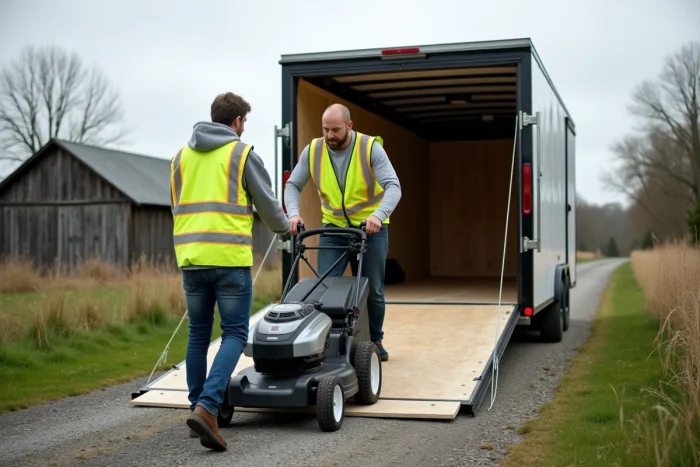
Versatile uses beyond classic loading
Specialized pages often present the ramp as a construction tool. In reality, its usefulness in a domestic DIY context goes well beyond simple loading onto a trailer.
Crossing a workshop or garage door threshold with a heavily loaded cart becomes simple with a short ramp placed permanently. This avoids lifting the cart at each passage, protecting both the back and the transported equipment.
For homeowners maintaining a sloped yard, the ramp also serves to move gardening equipment between two levels of terrain, without having to carry a chipper or brush cutter on a trailer up an outdoor staircase.
Housing accessibility and dual use
A rarely discussed point: a loading ramp sized for DIY equipment can also facilitate access to housing for a person with reduced mobility, whether temporarily or permanently. This refers to a front door threshold or a terrace step. The same equipment serves two functions, making the purchase worthwhile for households concerned with both needs.
Installation and storage: what no one shows in photos
Setting up a ramp takes less than a minute when you have chosen an appropriate model. You place the hooks on the edge of the tailgate or threshold, check that the pads are in contact with the ground, and ensure that the ramp does not move by pressing down on it before loading the equipment.
Storage poses more problems in a private workshop than the actual use. Folding ramps solve this issue by collapsing flat. Telescopic models retract and can stand against a wall. Before purchasing, measure the available storage space as well as the load to be supported.
A DIYer who regularly uses their ramp benefits from storing it close to the trailer or utility vehicle. Having to search for it at the back of the garage each time ends up being discouraging, leading to a return to the bad habits of carrying by hand.